Malaria

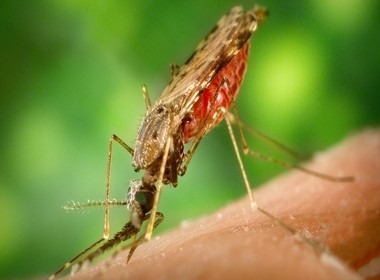
Female Anopheles mosquito transmitting malaria parasite during a blood meal

Malaria is a life-threatening parasitic infection caused by protozoa of the Plasmodium genus and transmitted to humans through the bite of an infected female Anopheles mosquito. Once introduced into the bloodstream, the parasite completes a sexual cycle within the mosquito and recurrent asexual cycles in humans, leading to the development of characteristic clinical symptoms. Gametocytes formed in human hosts perpetuate […]

Read more

Human Immunodeficiency Virus

Kaposi Sarcoma on the leg showing multiple violaceous plaques and nodules in an HIV-positive patient

Human Immunodeficiency Virus (HIV) is a major global health concern and remains one of the most significant infectious diseases affecting individuals, communities, and healthcare systems worldwide. HIV is a retrovirus that targets and progressively destroys CD4-positive T lymphocytes, leading to immune dysfunction and increased vulnerability to opportunistic infections and malignancies. Following initial exposure, HIV infection often presents with a transient […]

Read more

Infectious Mononucleosis

Maculopapular skin rash in infectious mononucleosis after amoxicillin treatment, showing widespread erythematous exanthem.

Infectious Mononucleosis (Glandular Fever)—commonly referred to as mono—is an acute viral illness caused predominantly by the Epstein–Barr virus (EBV), a member of the herpesvirus family. First characterised in the 1920s, the infection is transmitted primarily through saliva, earning it the nickname “the kissing disease”, although sharing drinking glasses, utensils, or toothbrushes can also facilitate spread. The incubation period ranges from […]

Read more

Miscellaneous Red Cell Abnormalities

Bone marrow aspirate showing multinucleated erythroid precursors characteristic of Congenital Dyserythropoietic Anemias.

Miscellaneous Red Cell Abnormalities: Causes and Overview This section explores the common miscellaneous red blood cell (RBC) abnormalities and their clinical relevance. Hemoglobin production, a vital function of the bone marrow, is an intricate biochemical process involving the coordinated synthesis of heme and globin chains. Adult human bone marrow synthesizes 4 X 10¹⁴ molecules of hemoglobin every second. Heme and globin […]

Read more

Hemolytic Disease Of The Newborn (HDN)

Illustration showing Rh-negative mother becoming sensitized to Rh-positive fetal red cells leading to antibody formation and hemolysis in a subsequent pregnancy, demonstrating the mechanism of Hemolytic Disease of the Newborn.

  Hemolytic disease of the newborn (HDN) is an alloimmune condition in which maternal IgG antibodies cross the placenta and destroy fetal red blood cells, leading to fetal anemia, hydrops fetalis, jaundice and, historically, significant neonatal mortality. Although the condition was first documented as early as 1609, its true mechanism remained unknown for centuries until the 1950s, when researchers clarified […]

Read more

Sickle Cell Disease

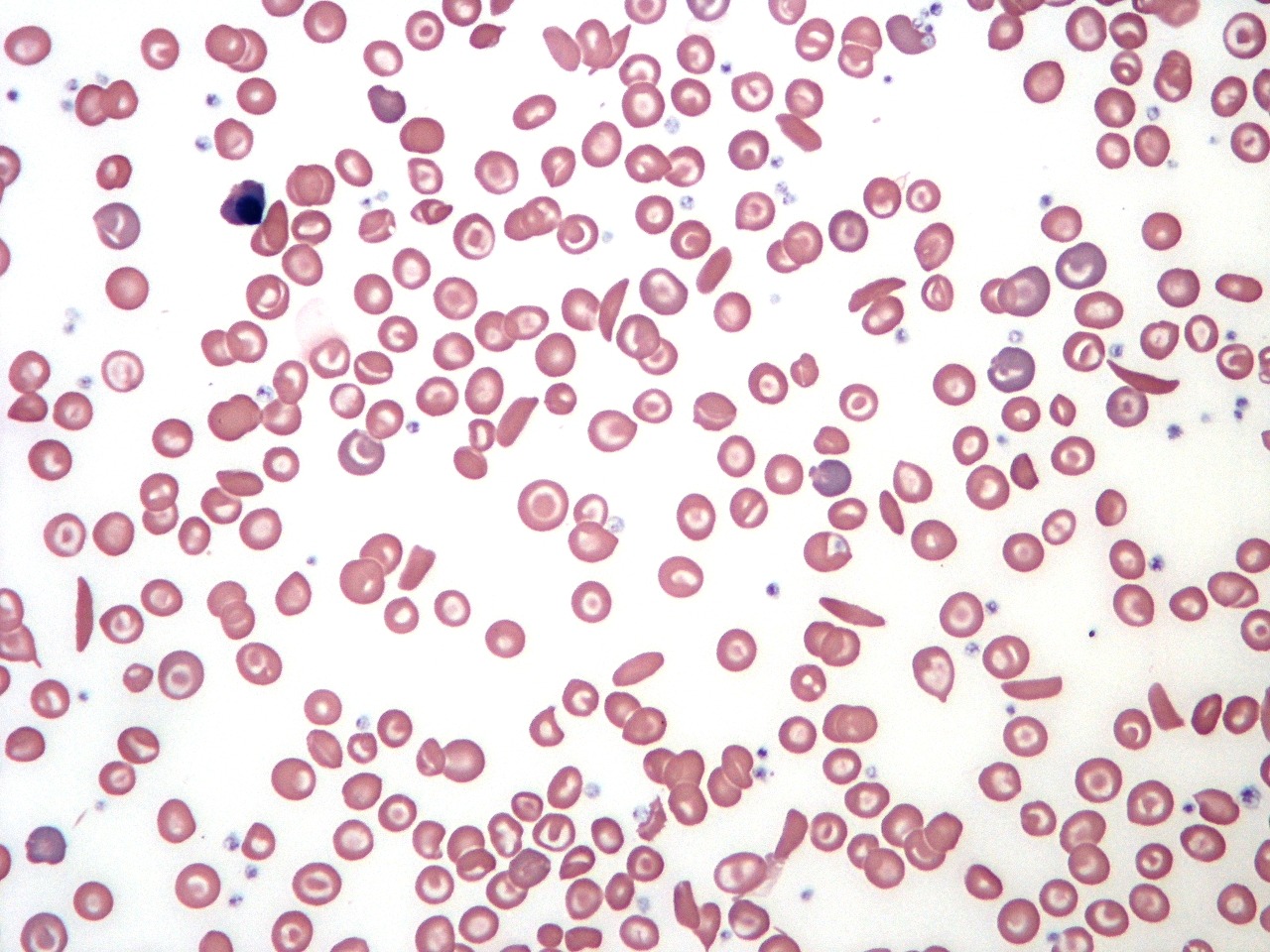
Peripheral blood film showing sickle cell disease with sickled erythrocytes, target cells, and anisopoikilocytosis

Sickle cell disease (SCD) is a hereditary hemoglobinopathy caused by a point mutation in the β-globin gene, resulting in the production of hemoglobin S (HbS). This abnormal hemoglobin polymerizes under low–oxygen conditions, distorting red blood cells into rigid, crescent-shaped “sickle” forms. Sickle cell disease is most prevalent among individuals of African descent, although it also affects populations in the Middle […]

Read more

Thalassemias

Thalassemia major showing thalassemic facies with frontal bossing and hair on end appearance on skull X-ray due to bone marrow hyperplasia

What are Thalassemias? Thalassemias are a group of inherited blood disorders characterized by defective production of hemoglobin, the oxygen-carrying protein within red blood cells. This abnormal hemoglobin synthesis leads to premature destruction of red blood cells, resulting in chronic hemolytic anemia of varying severity. The underlying defect in thalassemias arises from mutations in one or more of the globin genes, […]

Read more

Pyruvate Kinase Deficiency

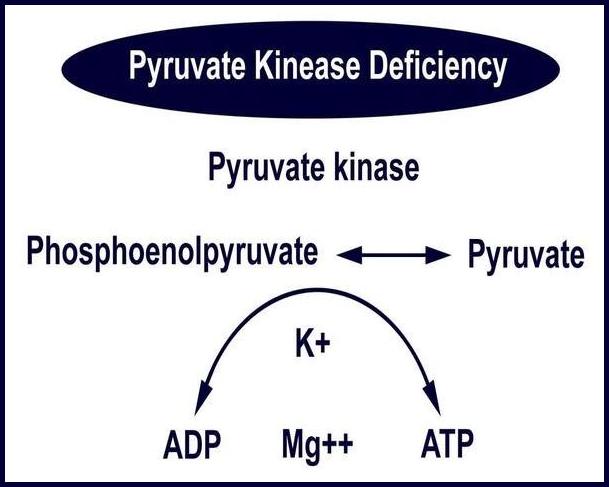
Pyruvate kinase deficiency metabolic pathway showing impaired conversion of phosphoenolpyruvate to pyruvate with reduced ATP production in red blood cells causing hemolytic anemia

Pyruvate kinase deficiency (PKD) is one of the most common inherited enzymatic disorders of red blood cells and a well-recognized cause of chronic non-spherocytic hemolytic anemia. The clinical severity of PKD varies widely, ranging from fully compensated mild anemia to severe, transfusion-dependent hemolysis. Among red cell enzyme deficiencies that cause hemolytic anemia, PKD is the second most frequent worldwide, following […]

Read more

G6PD Deficiency

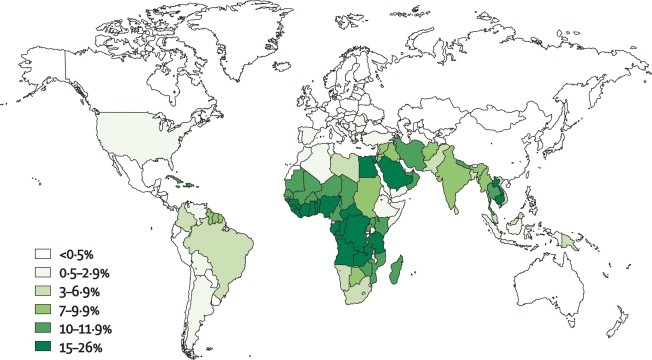
Global prevalence map of G6PD deficiency showing highest rates across Africa, the Mediterranean, the Middle East, and Southeast Asia.

Introduction: Glucose-6-phosphate dehydrogenase (G6PD) deficiency is the most common human enzyme disorder, affecting an estimated 400 million people worldwide. Its geographic distribution closely mirrors historical malaria prevalence, supporting the malaria-protection hypothesis. The condition is particularly frequent in individuals from Africa, the Mediterranean region, the Middle East, and Asia. G6PD deficiency is inherited in an X-linked recessive pattern and results from […]

Read more

Paroxysmal Nocturnal Hemoglobinuria

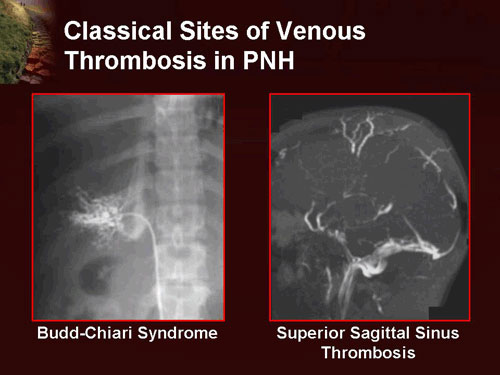
Paroxysmal nocturnal hemoglobinuria showing classical venous thrombosis sites including Budd–Chiari syndrome and superior sagittal sinus thrombosis on imaging

Introduction: Paroxysmal nocturnal hemoglobinuria (PNH) is a rare, acquired, life-threatening hematologic disorder characterized by complement-mediated intravascular hemolysis, a marked tendency for thrombosis, and varying degrees of bone marrow failure. It is the only form of hemolytic anemia caused by an acquired intrinsic defect of the red blood cell membrane rather than an inherited abnormality. This defect results from a mutation […]

Read more
1 6 7 8 9 10