Bone Marrow Examination
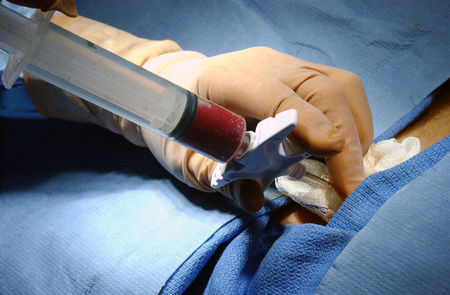
Bone marrow examination: bone marrow aspiration performed from the posterior iliac crest using a specialized aspiration needle and syringe
Bone marrow examination refers to the pathologic analysis of samples of bone marrow obtained by bone marrow aspiration and bone marrow biopsy (often called a trephine biopsy).
Bone marrow is soft, gelatinous tissue that fills the medullary cavities, the centers of bones. The two types of bone marrow are red bone marrow, known as myeloid tissue, and yellow bone marrow, or fatty tissue.
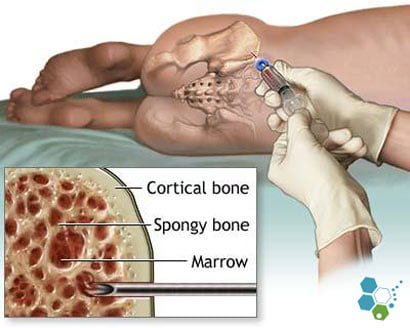
Bone marrow examination illustration demonstrating cortical bone, spongy (trabecular) bone, and bone marrow structure at the iliac crest
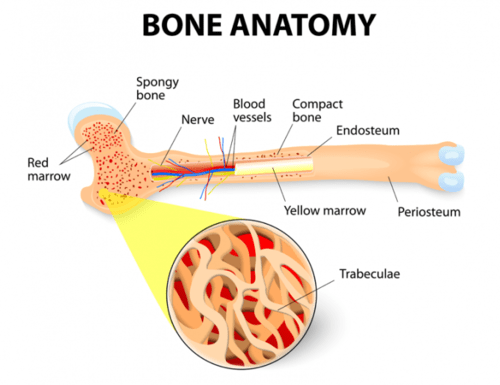
A detailed medical diagram illustrating the structure of human bone, specifically highlighting the bone marrow where hematopoiesis (blood cell formation) occurs
Bone marrow contains immature cells, called stem cells. Many people with blood cancers, such as leukemia and lymphoma, sickle cell anemia, and other life-threatening diseases, rely on bone marrow or cord blood transplants to survive.
Healthy bone marrow and blood cells are needed in order to live. When the disease affects bone marrow so that it can no longer function effectively, a marrow or cord blood transplant could be the best treatment option; for some patients, it is the only potential cure.
Bone marrow examination is used in the diagnosis of a number of conditions, including leukemia, multiple myeloma, lymphoma, anemia, and pancytopenia. The bone marrow produces the cellular elements of the blood, including platelets, red blood cells, and white blood cells. While much information can be obtained by testing the blood itself (drawn from a vein by phlebotomy), it is sometimes necessary to examine the source of the blood cells in the bone marrow to obtain more information on hematopoiesis; this is the role of bone marrow aspiration and biopsy.
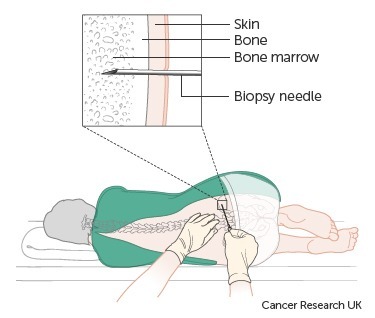
Bone marrow examination schematic illustrating insertion of a biopsy needle through the skin and bone to obtain a bone marrow sample
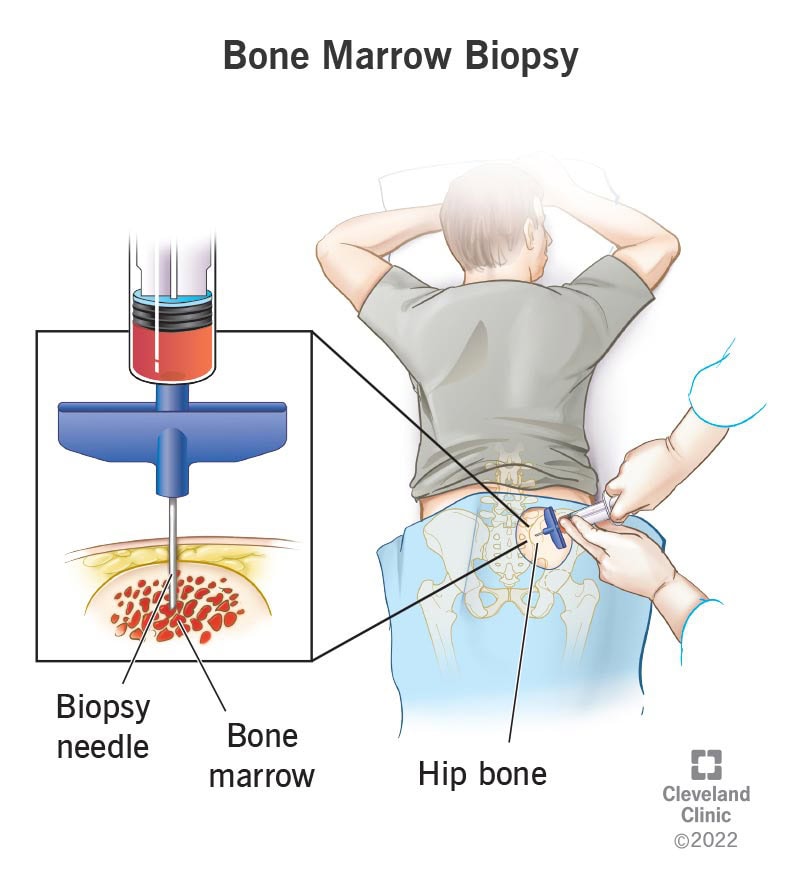
Bone marrow examination showing a trephine bone marrow biopsy performed from the posterior iliac crest using a biopsy needle to obtain a core sample for histopathological assessment
Fast facts on bone marrow:
- Bone marrow produces 200 billion new red blood cells every day, along with white blood cells and platelets.
- Bone marrow contains mesenchymal and hematopoietic stem cells.
- Around 10,000 people in the US are diagnosed each year with diseases that require bone marrow transplants.
- Several diseases pose a threat to bone marrow and prevent bone marrow from turning stem cells into essential cells.
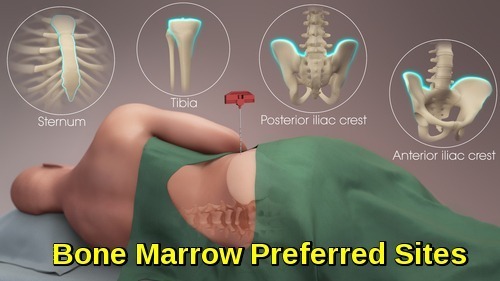
Bone marrow examination illustrating the preferred anatomical sites for bone marrow aspiration and biopsy, with the posterior iliac crest being the most commonly used site in adults
The Procedure:
Usually, the bone marrow examination is performed in a hospital or an outpatient clinic by a trained physician. Bone marrow aspiration and trephine biopsy are usually performed on the back of the hipbone or posterior iliac crest. An aspirate can also be obtained from the sternum (breastbone). For the sternal aspirate, the patient lies on their back, with a pillow under the shoulder to raise the chest. A trephine biopsy should never be performed on the sternum, due to the risk of injury to blood vessels, lungs or the heart. Bone marrow aspiration may also be performed on the tibia (shinbone) in children up to 2 years of age while spinous process aspiration is frequently done in a lumbar puncture position and on the L3-L4 vertebrae.
A local anesthetic, usually lidocaine or a similar drug, is used to numb the area of the skin and periosteum at the puncture site before the procedure. The patient may also receive systemic analgesia and/or anti-anxiety medications.
Typically, the aspirate is performed first. An aspirate needle is inserted through the skin using manual pressure and force until it abuts the bone. Then, with a twisting motion of clinician’s hand and wrist, the needle is advanced through the bony cortex (the hard outer layer of the bone) and into the marrow cavity. Once the needle is in the marrow cavity, a syringe is attached and used to aspirate (“suck out”) liquid bone marrow. The patient may feel a brief sharp pain or stinging during bone marrow aspiration. A twisting motion is performed during the aspiration to avoid excess content of blood in the sample (hemodilution), which might be the case if an excessively large sample from one single point is taken.
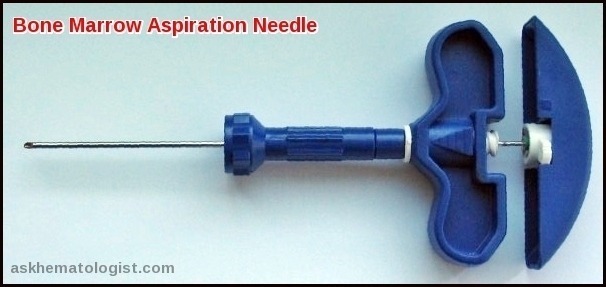
Bone marrow examination instrument showing a bone marrow aspiration needle used to obtain liquid marrow samples for cytological analysis
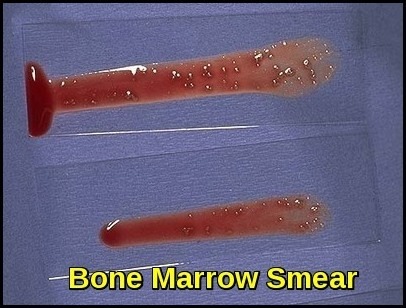
Bone marrow examination demonstrating bone marrow smear preparations used for cytological assessment of marrow cells
Subsequently, the biopsy is performed if indicated. A different, larger trephine needle is inserted and anchored in the bony cortex. The needle is then advanced with a twisting motion and rotated to obtain a solid piece of bone marrow. This piece is then removed along with the needle. The entire procedure, once preparation is complete, typically takes 10–15 minutes. If several samples are taken, the needle is removed between the samples to avoid blood coagulation.

Bone marrow examination instrument showing a Jamshidi bone marrow biopsy needle used to obtain a core (trephine) bone marrow sample

Bone marrow examination demonstrating a trephine biopsy core sample prepared on a glass slide and placed in fixative for histopathological processing
The experience is not uniform; different patients report different levels of pain, and some do not report any pain.
After the procedure is complete, the patient is typically asked to lie flat for 5–10 minutes to provide pressure over the procedure site. After that, assuming no bleeding is observed, the patient can get up and go about their normal activities. Paracetamol or other simple analgesics can be used to ease soreness, which is common for 2–3 days after the procedure. Any worsening pain, redness, fever, bleeding or swelling may suggest a complication. Patients are also advised to avoid washing the procedure site for at least 24 hours after the procedure is completed.
Components of the procedure:
Bone marrow samples can be obtained by aspiration and trephine biopsy. Sometimes, a bone marrow examination will include both an aspirate and a biopsy. The aspirate yields semi-liquid bone marrow, which can be examined by a pathologist under a light microscope and analyzed by flow cytometry, chromosome analysis, or polymerase chain reaction (PCR). Aspiration does not always represent all cells since some such as lymphoma stick to the bone trabeculae, and would thus be missed by a simple aspiration.

Bone marrow examination demonstrating bone marrow aspiration performed using a syringe to obtain liquid marrow for cytological analysis
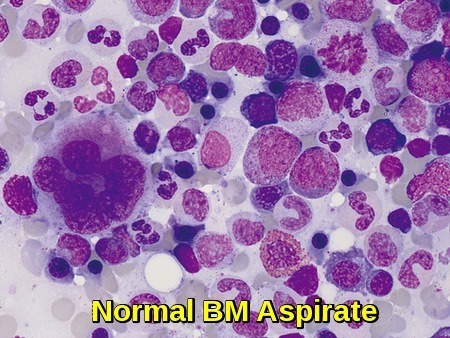
Bone marrow examination demonstrating a normal bone marrow aspirate with trilineage hematopoiesis and normal maturation of hematopoietic cells
Frequently, a trephine biopsy is also obtained, which yields a narrow, cylindrically shaped solid piece of bone marrow, 2 mm wide and 2 cm long (80 μL), which is examined microscopically (sometimes with the aid of immunohistochemistry) for cellularity and infiltrative processes. An aspiration, using a 20 mL syringe, yields approximately 300 μL of bone marrow. A volume greater than 300 μL is not recommended, since it may dilute the sample with peripheral blood.

Bone marrow examination demonstrating a normal trephine biopsy with preserved marrow architecture, normal cellularity, and intertrabecular hematopoiesis
Contraindications:
Bone marrow examination has very few contraindications and is considered a safe diagnostic procedure when performed by an experienced clinician. Importantly, thrombocytopenia and inherited or acquired bleeding disorders are not absolute contraindications, as bone marrow aspiration and trephine biopsy can be safely undertaken even in cases of severe thrombocytopenia with appropriate technique and post-procedure care. The main practical contraindication is the presence of active skin or soft-tissue infection at the intended biopsy site, most commonly over the posterior iliac crest; in such cases, an alternative site should be selected to minimize the risk of infection.
Complications:
Bone marrow aspiration and trephine biopsy are generally well-tolerated procedures with a low overall complication rate. Most patients experience only minor discomfort or mild soreness at the biopsy site for 12–24 hours, which typically resolves without intervention.
Serious complications are uncommon. Large case series report serious adverse event rates in the range of approximately 0.05–0.1%, with clinically significant bleeding being the most frequently documented serious outcome. Other reported complications include local infection, prolonged pain, hematoma formation, and very rarely, injury to adjacent structures.
Although fatal outcomes are extremely rare, isolated case reports exist in the literature describing deaths following bone marrow biopsy, most often in the context of severe uncontrolled bleeding, infection, or profound coagulopathy. These events underscore the importance of careful patient selection, appropriate technique, and peri-procedural management of bleeding risk, especially in patients with severe thrombocytopenia or coagulation abnormalities.
Questions and Answers:
What is a bone marrow examination?
A bone marrow examination is a diagnostic procedure that involves obtaining bone marrow samples through aspiration and/or trephine biopsy to evaluate blood cell production, marrow cellularity, and marrow architecture. It is essential for diagnosing and monitoring many hematologic and bone marrow disorders.
What is the difference between bone marrow aspiration and bone marrow biopsy?
Bone marrow aspiration removes liquid marrow for cytological and morphological assessment, while bone marrow biopsy (trephine biopsy) retrieves a solid core of marrow tissue to evaluate architecture, cellularity, fibrosis, and infiltration. Both procedures are often performed together to maximize diagnostic accuracy.
Why is bone marrow examination performed?
Bone marrow examination is performed to investigate unexplained anemia, leukopenia, thrombocytopenia, pancytopenia, suspected leukemia, lymphoma, multiple myeloma, myelodysplastic syndromes, marrow infiltration, and to assess response to treatment.
Where is bone marrow aspiration and biopsy usually done?
In adults, bone marrow aspiration and biopsy are most commonly performed from the posterior iliac crest due to its safety and high diagnostic yield. Other sites may be used in specific clinical situations.
Is bone marrow examination painful?
Most patients experience brief discomfort during aspiration and mild soreness at the biopsy site afterward. Pain is usually well controlled with local anesthesia, and post-procedure discomfort typically resolves within 12–24 hours.
Is bone marrow examination safe in patients with low platelet counts?
Yes. Thrombocytopenia is not an absolute contraindication. Bone marrow aspiration and biopsy can be safely performed even in cases of severe thrombocytopenia when undertaken by experienced clinicians using appropriate technique and post-procedure care.
What are the contraindications to bone marrow examination?
There are very few contraindications. Active skin or soft-tissue infection at the intended biopsy site is the main practical contraindication, and an alternative site should be chosen in such cases.
What complications can occur after bone marrow examination?
Minor complications include local pain and soreness. Serious complications such as significant bleeding or infection are rare, occurring in fewer than 0.1% of procedures.
How long does it take to recover from a bone marrow biopsy?
Most patients can resume normal activities within 24 hours. Mild discomfort may persist briefly, but prolonged recovery is uncommon.
What does a normal bone marrow aspirate look like?
A normal bone marrow aspirate shows trilineage hematopoiesis with normal maturation of erythroid, myeloid, and megakaryocytic cell lines and an appropriate myeloid-to-erythroid ratio.
What information does a trephine biopsy provide that aspiration cannot?
Trephine biopsy provides architectural detail, allowing assessment of marrow cellularity, fibrosis, infiltration, granulomas, and spatial distribution of hematopoietic cells, which may not be fully appreciated on aspirate smears alone.
How long does it take to get bone marrow examination results?
Preliminary aspirate results may be available within 24–48 hours, while full biopsy, immunohistochemistry, cytogenetic, and molecular results may take several days to weeks, depending on the tests performed.
Can bone marrow examination diagnose cancer?
Yes. Bone marrow examination plays a key role in diagnosing hematologic malignancies such as leukemia, lymphoma, and multiple myeloma, as well as detecting marrow involvement by solid tumors.
Can bone marrow examination help diagnose the cause of pyrexia of unknown origin (PUO)?
Yes. Bone marrow examination can be a valuable diagnostic tool in patients with pyrexia of unknown origin, particularly when there is associated cytopenia, hepatosplenomegaly, abnormal blood film findings, or suspicion of hematologic malignancy, infection, or inflammatory disease. Bone marrow aspiration and trephine biopsy may identify conditions such as lymphoma, leukemia, myelodysplastic syndromes, hemophagocytic lymphohistiocytosis (HLH), granulomatous infections (including tuberculosis), fungal infections, or marrow infiltration by systemic disease. Although it is not performed routinely in all cases of PUO, bone marrow examination can provide a definitive diagnosis in selected patients and guide further management.
Are bone marrow biopsy needles reusable?
No. Bone marrow aspiration and biopsy needles are single-use sterile instruments designed to minimize infection risk and ensure procedural safety.
Why are both bone marrow smear and trephine biopsy examined together?
Combining aspirate smears and trephine biopsy provides complementary cytological and architectural information, significantly improving diagnostic accuracy in bone marrow disorders.
References:
Nichols H. All you need to know about bone marrow. Medical News Today. MediLexicon International; 2017.
https://www.medicalnewstoday.com/articles/285666.php
Encyclopaedia Britannica. Bone marrow. Encyclopaedia Britannica; accessed November 2014.
Wikipedia contributors. Bone marrow examination. Wikipedia, The Free Encyclopedia.
https://en.wikipedia.org/wiki/Bone_marrow_examination
Riley RS, Hogan TF, Pavot DR, et al. A pathologist’s perspective on bone marrow aspiration and biopsy: I. Performing a bone marrow examination. J Clin Lab Anal. 2004;18(2):70–90. doi:10.1002/jcla.20008
Hjortholm N, Jaddini E, Hałaburda K, et al. Strategies of pain reduction during the bone marrow biopsy. Ann Hematol. 2013;92(2):145–149.
https://www.ncbi.nlm.nih.gov/pmc/articles/PMC3542425/
Radhakrishnan N. Bone marrow aspiration and biopsy: Background, indications, technical considerations. Medscape.
https://emedicine.medscape.com/article/207575-overview
Cleveland Clinic. Bone marrow biopsy. Educational illustration demonstrating posterior iliac crest trephine biopsy technique. © 2022 Cleveland Clinic.
Malempati S, Joshi S, Lai S, Braner D, Tegtmeyer K. Bone marrow aspiration and biopsy. N Engl J Med. 2008;359:e28.
https://www.nejm.org/doi/full/10.1056/NEJMvcm0804634
Bain BJ. Bone marrow biopsy morbidity and mortality. Br J Haematol. 2003;121(6):949–951.
Alsayegh H, Apostolidis J, Dhahi T, Mughir A, Alsafran Z, Adlan T. Endovascular management of iatrogenic arterial injury post bone marrow biopsy: A report of 3 cases. Radiology Case Reports. 2023;18(3):948–956.
https://doi.org/10.1016/j.radcr.2022.11.065
Bruneau J, Brouzes C, Asnafi V, Molina TJ. Bone marrow. In: van Krieken J, ed. Encyclopedia of Pathology. Springer; 2019.
https://doi.org/10.1007/978-3-319-28845-1_3875-1
Braunstein EM. Evaluation of anemia. MSD Manual Professional Edition.
https://www.msdmanuals.com/professional/hematology-and-oncology/approach-to-the-patient-with-anemia/evaluation-of-anemia
Keywords:
bone marrow examination, bone marrow biopsy, bone marrow aspiration, bone marrow test, bone marrow procedure, bone marrow sample, bone marrow evaluation, bone marrow analysis, bone marrow aspirate, trephine biopsy, bone marrow aspiration and biopsy, bone marrow examination indications, indications for bone marrow biopsy, bone marrow biopsy procedure, bone marrow aspiration technique, bone marrow biopsy interpretation, bone marrow examination results, bone marrow report interpretation, bone marrow cellularity, normal bone marrow, abnormal bone marrow findings, bone marrow smear, bone marrow aspirate smear, bone marrow histology, bone marrow trephine biopsy histology, posterior iliac crest bone marrow biopsy, bone marrow biopsy sites, bone marrow needle, Jamshidi needle, bone marrow biopsy complications, bone marrow biopsy safety, bone marrow biopsy bleeding risk, bone marrow examination in anemia, bone marrow examination in leukemia, bone marrow test for lymphoma, bone marrow examination in pancytopenia, bone marrow examination in PUO, pyrexia of unknown origin bone marrow biopsy, bone marrow diseases, bone marrow pathology, bone marrow biopsy recovery, bone marrow examination diagnosis, difference between bone marrow aspiration and biopsy, bone marrow examination slides, bone marrow test explained, bone marrow examination in hematology, Ask Hematologist, Dr Moustafa Abdou

Related Posts:


Request Online Consultation With Dr M Abdou
Fee: US$100
Secure payment via PayPal (credit and debit cards accepted)
Pay Now


Thank you to share your experience