Pyruvate Kinase Deficiency
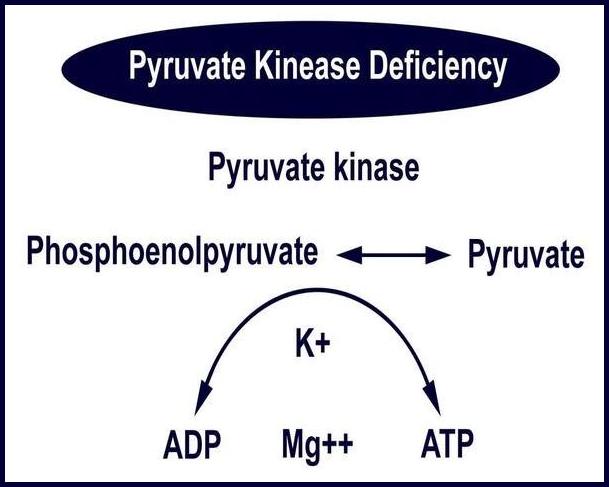
Pyruvate kinase deficiency metabolic pathway showing impaired conversion of phosphoenolpyruvate to pyruvate with reduced ATP production in red blood cells causing hemolytic anemia

Pyruvate kinase deficiency (PKD) is one of the most common inherited enzymatic disorders of red blood cells and a well-recognized cause of chronic non-spherocytic hemolytic anemia. The clinical severity of PKD varies widely, ranging from fully compensated mild anemia to severe, transfusion-dependent hemolysis. Among red cell enzyme deficiencies that cause hemolytic anemia, PKD is the second most frequent worldwide, following […]

Read more
G6PD Deficiency

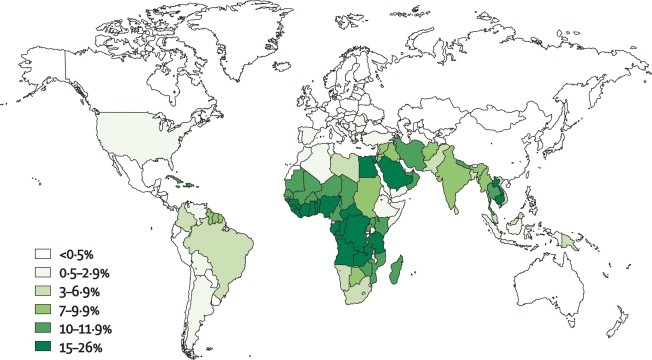
Global prevalence map of G6PD deficiency showing highest rates across Africa, the Mediterranean, the Middle East, and Southeast Asia.

Introduction: Glucose-6-phosphate dehydrogenase (G6PD) deficiency is the most common human enzyme disorder, affecting an estimated 400 million people worldwide. Its geographic distribution closely mirrors historical malaria prevalence, supporting the malaria-protection hypothesis. The condition is particularly frequent in individuals from Africa, the Mediterranean region, the Middle East, and Asia. G6PD deficiency is inherited in an X-linked recessive pattern and results from […]

Read more